Hand-worked at the bench
Rebuilt the way it was woven
Every repair is worked by hand with a needle and matched yarn — the same techniques that built the rug in the first place. Nothing is glued, taped, or handed off to an outside workroom.
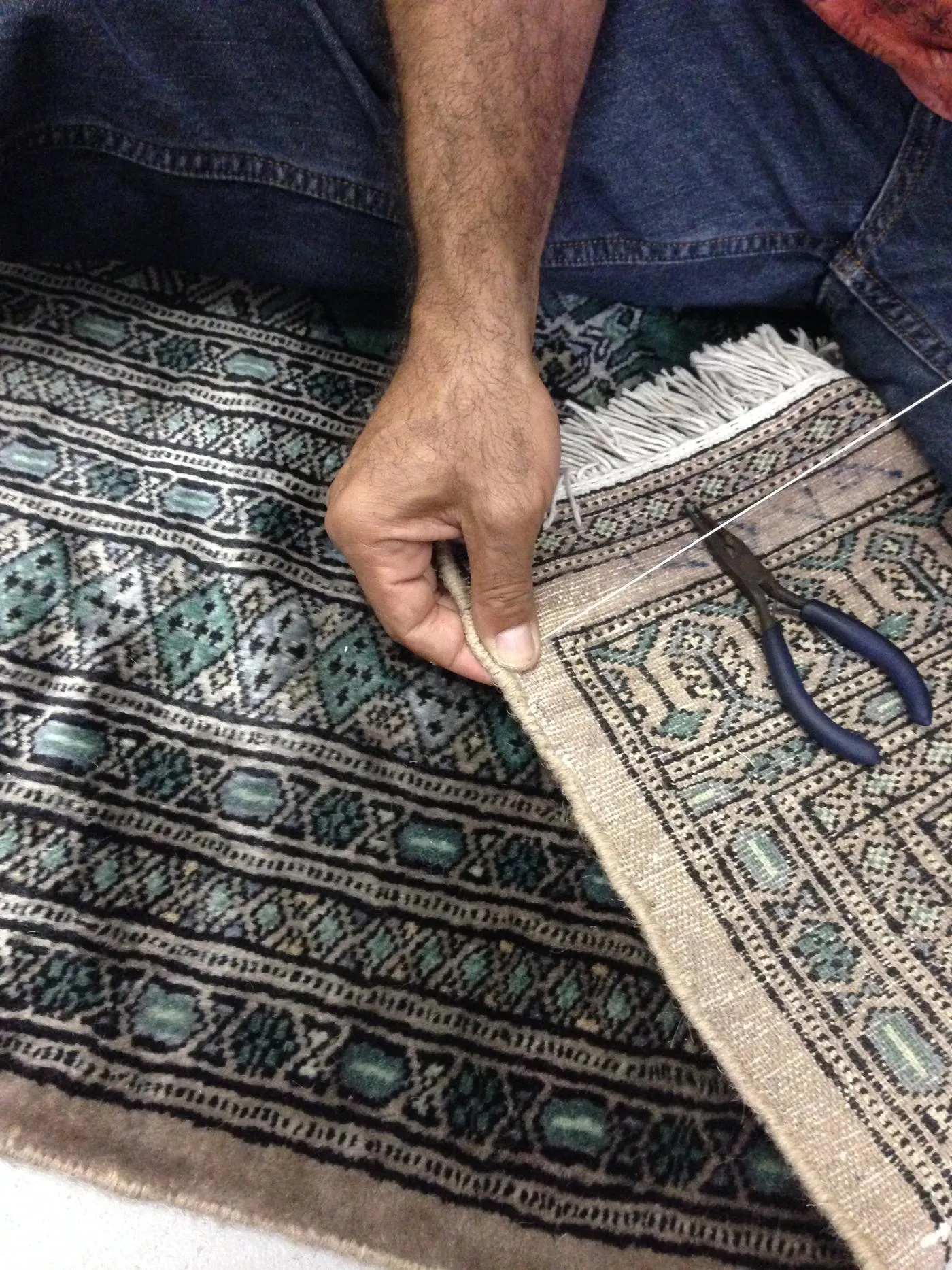
A thinning fringe or a small hole doesn’t mean the rug is done for. We rebuild rugs by hand at our own Wilton Manors plant — the very place they’re washed — so the fix follows the weave instead of hiding it.
A small fix now, a big one later
A rug comes apart from its edges inward. The knots at the end are held in place by the fringe and the side cords; once those let go, the pile beside them has nothing to anchor it and starts walking off the rug a row at a time.
Spotted early, a loosening fringe or a fraying edge is a fast, contained repair. Left through another season of foot traffic in a busy Island City household, that same edge becomes lost knots that have to be rewoven — far more labor, and far more cost.
The least costly repair is nearly always the earliest one.
So when we notice early wear at a cleaning inspection, we point it out — not to pad the bill, but because a stitch now spares you a reweave later.
Hand-worked at the bench
Every repair is worked by hand with a needle and matched yarn — the same techniques that built the rug in the first place. Nothing is glued, taped, or handed off to an outside workroom.
Done in-house
Those fringe threads are the rug’s warp foundation running out past the pile — structure, not decoration. We anchor a loosening fringe or rebuild one that has gone so the end knots stay locked where they belong.
The wrapped side cords along each selvedge take the constant knocks from vacuum wheels and furniture legs. We re-wrap and re-anchor those worn edges by hand before the pile sitting next to them starts to let go.
A hole or a burn is rewoven knot by knot in matched wool, following the original pattern so the repair settles into the design rather than sitting on top of it.
Moths feed on wool from the underside, out of sight. We treat the infestation, then reweave the grazed and eaten patches back up to full pile.
A rug left damp on the slab can rot at the foundation until it cracks. We gauge how far it has spread and rebuild the sound sections still worth saving.
Wool and foundation can be carefully taken in — a rug shortened or narrowed to suit a mid-century Island City living room — and a tired antique carried back through full restoration, always weighed against what the piece is truly worth.
Staying off the bench
A handful of small habits do most of the work. Rotate the rug a couple of times a year so one walking path doesn’t take all the wear, and use a proper pad underneath — it keeps the rug from sliding and cushions the foundation against the hard terrazzo and tile that floor so many Wilton Manors homes.
Moisture is the fiber’s real enemy here: blot spills quickly and never leave a damp rug lying, because the salt-laden humidity coming off the Middle River turns lingering wet into rot and mildew fast. And run the vacuum gently, steering the beater bar clear of the fringe, since that is where the unraveling tends to start.
The honest part
Yes — plainly. Some rugs are worth far more than the repair, and some are worth less than the hours a proper fix demands. We’ll tell you which yours is before you spend a cent.
A straight rug man will talk you out of a repair as quickly as into one.
If a rug holds real sentimental value, the call is yours — but you’ll make it knowing the honest cost and the honest result, not a pitch.
Free assessment, zero pressure
Send us a few details and we’ll collect the rug in Wilton Manors, look it over, and give you a straight answer on the repair before any work begins.